Understanding the Technological Landscape
Introduction: The AI Revolution
Artificial Intelligence (AI) has evolved dramatically, reshaping industries and redefining human-machine interactions. From rule-based Traditional AI systems to the creative ingenuity of Generative AI, the journey highlights a shift from rigidity to adaptability. This blog explores these two paradigms, their capabilities, applications, and future implications.
Traditional AI: The Foundation of Artificial Intelligence
1. What is Traditional AI
Traditional AI, often referred to as symbolic AI, focuses on solving well-defined problems through predefined rules and algorithms. It excels in structured environments requiring precision but lacks flexibility.
2.Key Characteristics
– Rule-Based Processing: Operates on programmed “if-then” rules and decision trees.
– Narrow Intelligence: Specializes in specific tasks, unable to adapt across domains.
– Data Limitations: Works within predefined datasets to derive insights.
– Controlled Learning: Requires manual updates for learning and improvement.
3.Applications
Traditional AI powers systems requiring stability and predictability, such as:
– Spam filtering
– Basic recommendation engines
– Diagnostic tools in healthcare
– Industrial automation
4.Limitations
– Inflexibility for new tasks
– Reliance on structured, historical data
– Inability to generate novel solutions or evolve autonomously
Generative AI: A New Frontier in Intelligence
1. What is Generative AI
Generative AI represents a transformative leap, enabling machines to create original content like text, images, music, and more. Using advanced neural networks, it adapts dynamically to inputs and context.
2.Key Characteristics
– Content Creation: Generates original text, visuals, and designs.
– Dynamic Learning: Continuously evolves, applying contextual understanding.
– Advanced Architectures: Uses transformer models like GPT or DALL·E for nuanced outputs.
– Multidomain Flexibility: Transfers knowledge across varied fields.
3.Applications
Generative AI is revolutionizing industries:
– Content Creation: Marketing copy, storytelling, and visual designs.
– Healthcare: Personalized treatments and drug discovery.
– Education: Adaptive learning systems tailored to individual students.
– Creative Arts: Generating music, digital art, and game design assets.
4.Advantages
– Creative and adaptive outputs
– Versatility across industries
– Scalability without reprogramming
– Capability to solve complex, multidimensional problems
Comparative Analysis: Traditional AI vs Generative AI
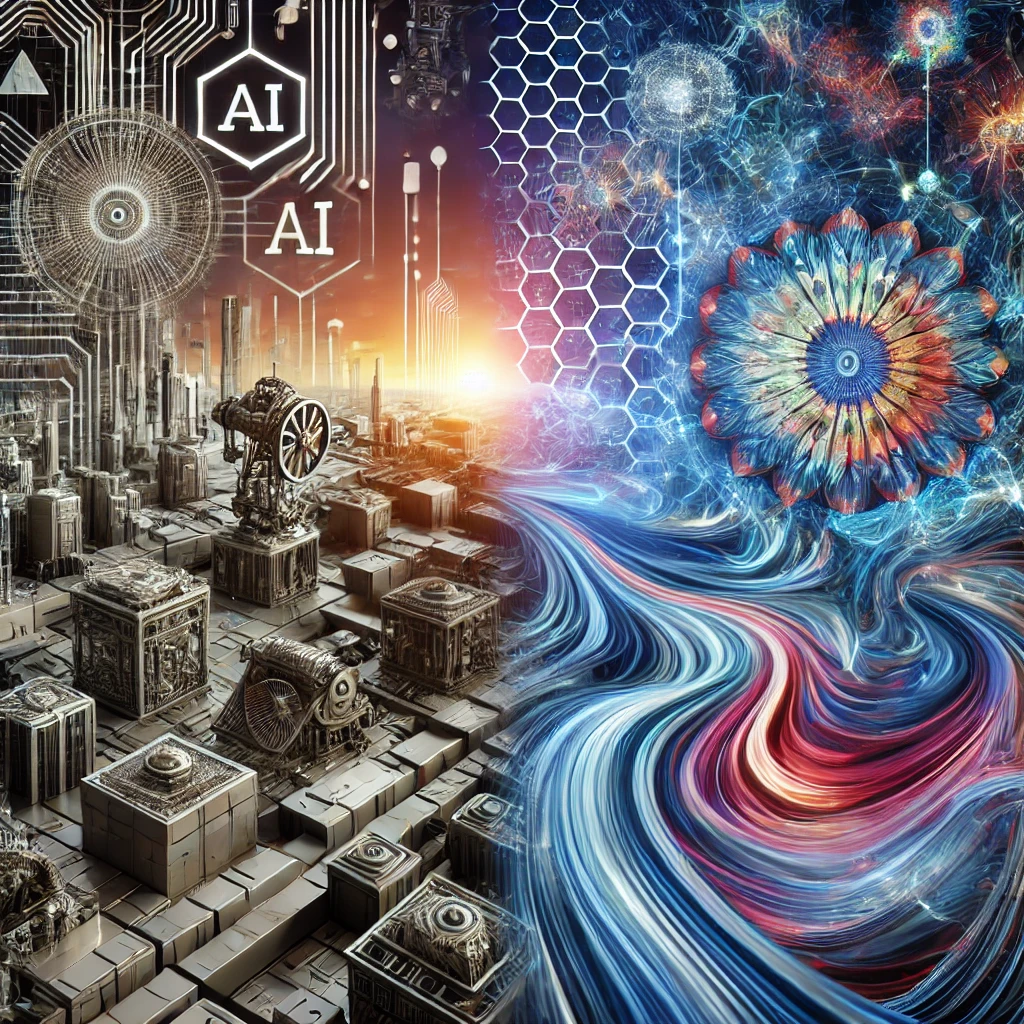
The differences between Traditional AI and Generative AI highlight their distinct strengths and applications. Traditional AI is built on rule-based systems that excel at analyzing structured data and solving specific, predefined problems. These systems offer reliability and consistency, making them ideal for applications like spam filtering, automated grading, or industrial process control. However, their narrow focus and lack of adaptability limit their usability across diverse tasks, as they require manual updates or reprogramming to handle new challenges.
In contrast, Generative AI represents a paradigm shift toward creativity and versatility. Powered by advanced neural networks and models like transformers, Generative AI can produce original content, such as text, images, and music. It adapts to contextual nuances, learns dynamically, and transfers knowledge across domains. This adaptability enables groundbreaking applications, from personalized healthcare to innovative marketing campaigns. While Traditional AI relies on structured datasets and deterministic algorithms, Generative AI thrives on vast amounts of data, enabling it to solve complex, multifaceted problems.
Ultimately, these two forms of AI complement each other: Traditional AI ensures precision and efficiency in structured tasks, while Generative AI introduces creativity and adaptability to expand the boundaries of what machines can achieve. Together, they are shaping a future where AI supports human ingenuity in unprecedented ways.
The Real-World Impact of AI Technologies
1. Transforming Industries
1.Healthcare
– Traditional AI: Tools for diagnosing diseases based on fixed patterns.
– Generative AI: Synthesizing new drug compounds and simulating surgeries.
2.Education
– Traditional AI: Automating grading systems and basic assessments.
– Generative AI: Developing interactive learning experiences.
3.Business
– Traditional AI: Optimizing inventory management.
– Generative AI: Crafting marketing strategies and customer engagement solutions.
2. Ethical Challenges
The rise of AI technologies introduces critical ethical concerns:
– Bias in Models: Generative AI risks inheriting societal biases from training data.
– Job Automation: AI may disrupt industries reliant on human creativity and precision.
– Intellectual Property: Uncertainty around ownership of AI-generated content.
Looking Ahead: The Future of AI
1.Emerging Trends
– Multimodal AI: Integration of text, video, and imagery in a cohesive framework.
– Human-AI Collaboration: Merging human intuition with machine efficiency.
– Sustainable AI: Advancements in energy-efficient algorithms and tools.
2.The Road Ahead
By combining the analytical precision of Traditional AI with the creative potential of Generative AI, the future promises to address global challenges innovatively and sustainably.
Conclusion
Traditional AI laid the groundwork for machine intelligence, while Generative AI pushes boundaries, fostering creativity and adaptability. Together, they represent complementary facets of the AI revolution, poised to transform industries and redefine human potential.
Stay updated with **TechcycloHub** for more insights into the future of AI and technology!